Venus
Venus, the second planet from the Sun, is known for its extreme temperatures and thick, toxic atmosphere.
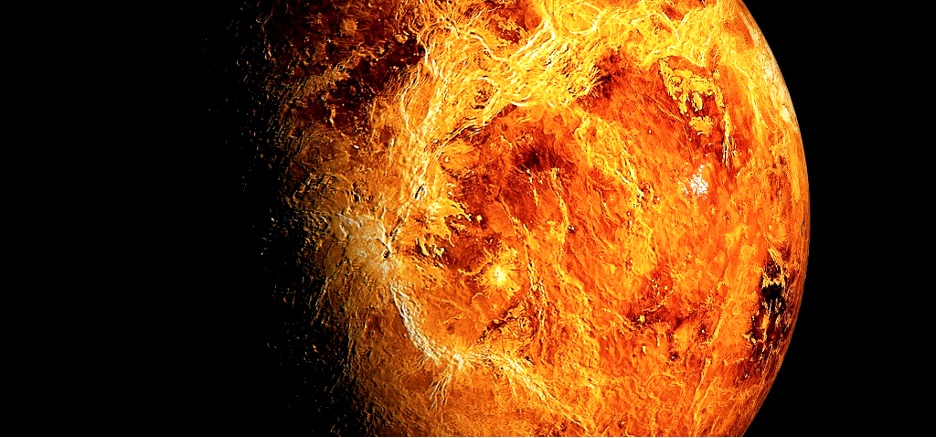
Venus, the second planet from the Sun, is known for its extreme temperatures and thick, toxic atmosphere.
Venus is often called Earth's "sister planet" due to its similar size and composition. However, the conditions on Venus are vastly different, with scorching surface temperatures, intense atmospheric pressure, and clouds of sulfuric acid. Venus rotates in the opposite direction to most planets in the solar system, including Earth.
Venus has a thick atmosphere composed mainly of carbon dioxide (96.5%), with traces of nitrogen, sulfur dioxide, and other gases. The atmosphere causes a runaway greenhouse effect, trapping heat and raising surface temperatures to over 460°C (860°F), hotter than Mercury, the closest planet to the Sun. The clouds are made of sulfuric acid and reflect much of the sunlight, giving Venus its yellowish appearance from space.
The surface of Venus is obscured by clouds, but radar mapping has revealed vast plains covered by volcanic rocks and numerous volcanoes. The surface temperature is incredibly hot, and the atmospheric pressure is about 90 times that of Earth's. Venus also experiences extreme winds and occasional volcanic activity. The planet’s rotation is very slow, and a day on Venus (one full rotation) is longer than a year (one complete orbit around the Sun).
Venus has no moons. Unlike Earth, Mars, and other planets in the solar system, Venus does not have any natural satellites. The reasons for this are still unclear, though it may have had moons in the past that were either destroyed or captured by the Sun.
Venus has been visited by numerous spacecraft, both from the United States and the Soviet Union. NASA's Mariner 2 was the first to successfully fly by Venus in 1962, and the Soviet Union’s Venera program sent several probes to land on the planet’s surface, providing valuable data about its hostile environment. More recently, NASA's Magellan mission used radar mapping to survey Venus's surface and atmospheric properties. However, the extreme conditions on Venus make it one of the most difficult planets to explore.