Mercury
Mercury, the smallest and fastest planet in our solar system, is known for its extreme temperatures and proximity to the Sun.
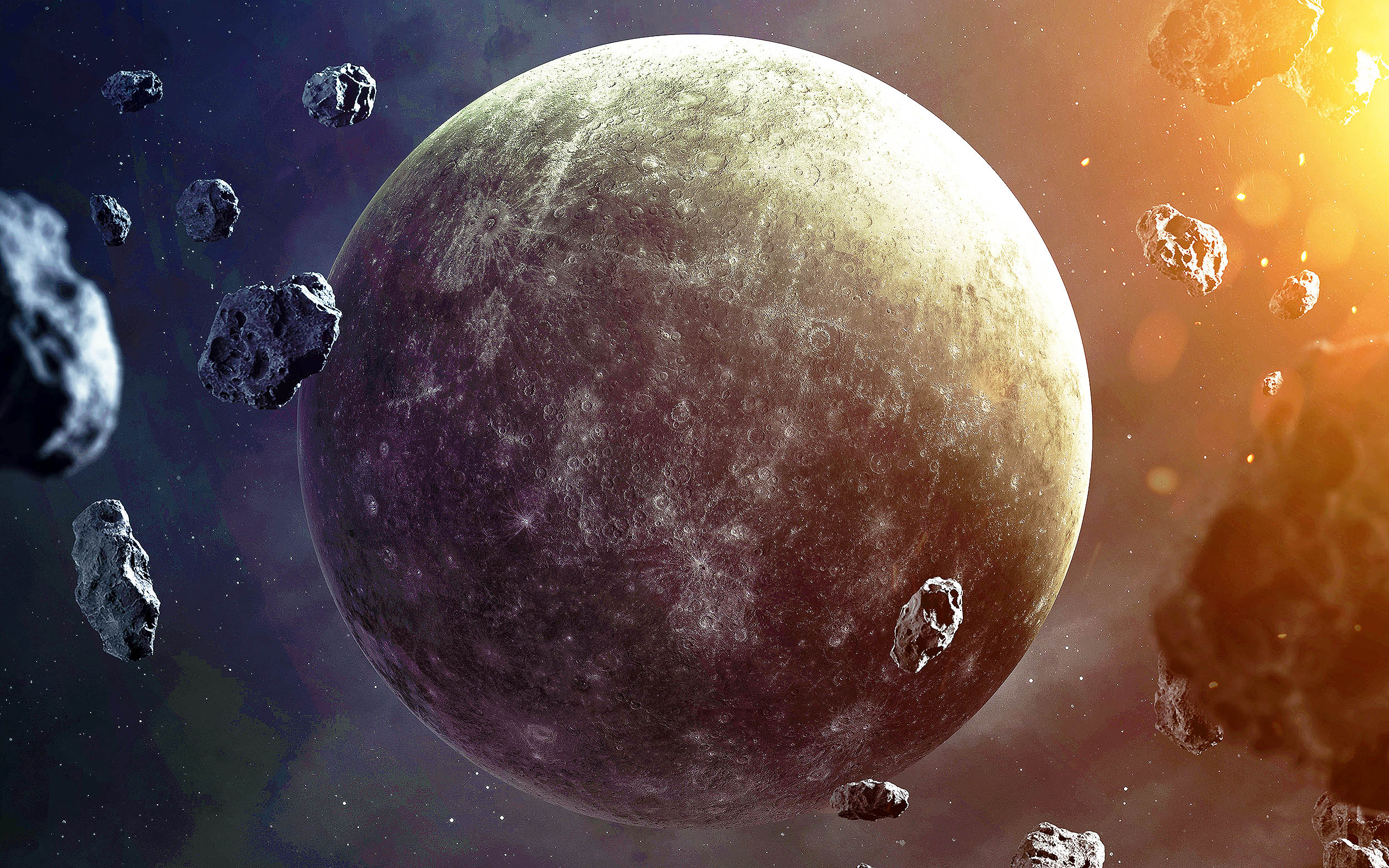
Mercury, the smallest and fastest planet in our solar system, is known for its extreme temperatures and proximity to the Sun.
Mercury is the closest planet to the Sun and the smallest in our solar system. Despite its small size, it has a high density due to its iron-rich core. It has no atmosphere to speak of, making it subject to extreme temperature fluctuations between day and night.
Mercury has a very thin atmosphere, known as an exosphere, primarily composed of oxygen, sodium, hydrogen, helium, and potassium. This exosphere is not dense enough to provide any protection from solar radiation or retain heat.
Mercury has no moons, unlike many other planets in the solar system. This is likely due to its proximity to the Sun, which makes it difficult for Mercury to capture any passing objects into orbit.
Mercury experiences extreme temperature variations due to its lack of atmosphere. Daytime temperatures can reach up to 430°C (800°F), while at night, temperatures can drop to -180°C (-290°F), creating one of the most extreme climates in the solar system.
Mercury has been explored by two spacecraft: NASA's Mariner 10 in the 1970s and more recently by the MESSENGER mission. These missions provided detailed data about its surface, magnetic field, and exosphere.