Mars
Mars, the Red Planet, is the fourth planet from the Sun in our solar system.
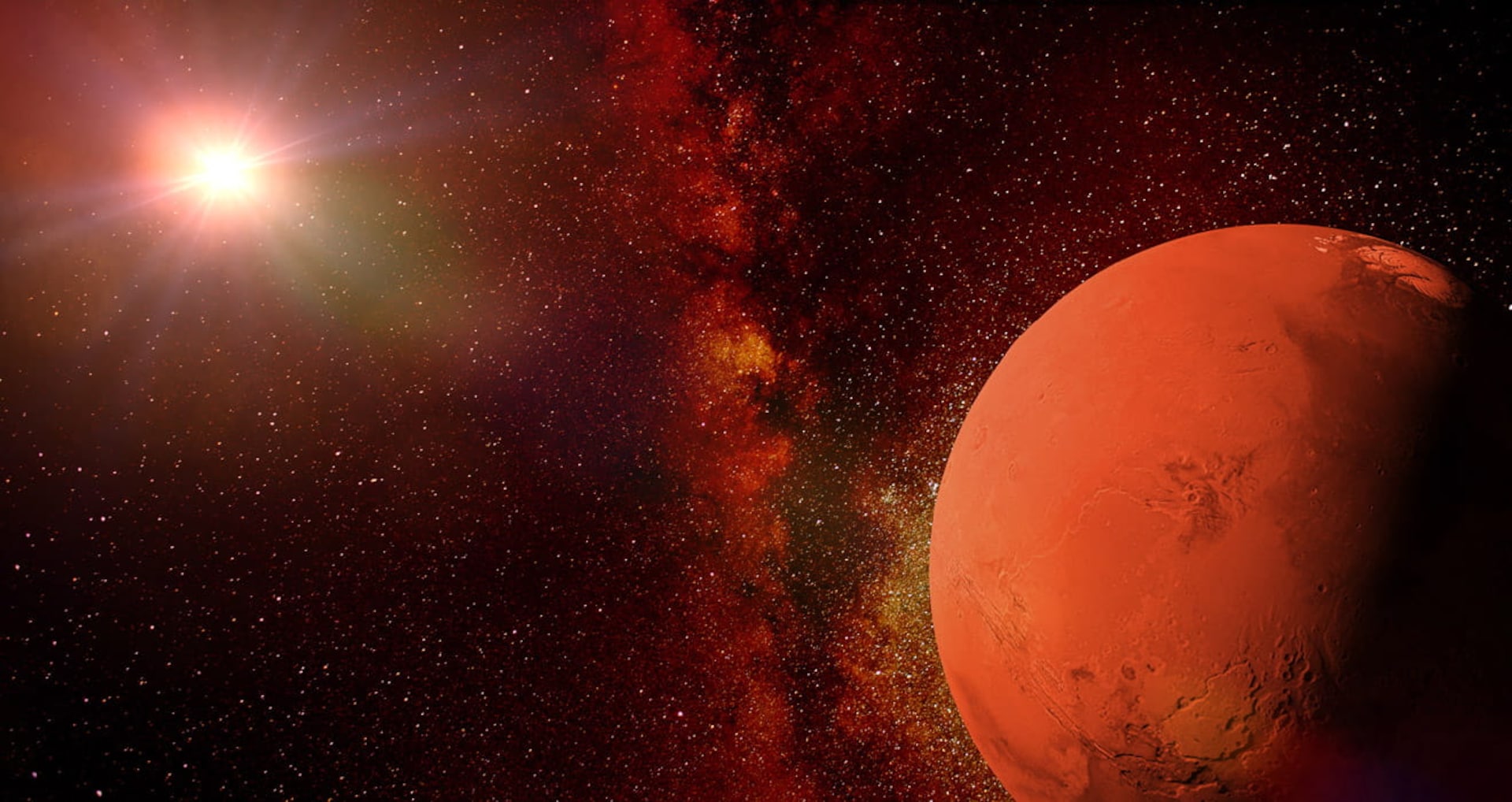
Mars, the Red Planet, is the fourth planet from the Sun in our solar system.
Mars is the fourth planet from the Sun and is often called the "Red Planet" because of its reddish appearance, which is caused by iron oxide (rust) on its surface. It has been a target for exploration due to its similarities to Earth and potential for past or present microbial life.
Mars has a thin atmosphere composed mainly of carbon dioxide (95.3%), nitrogen (2.7%), and argon (1.6%). The atmosphere is too thin to support human life without artificial habitats, but it does provide some protection from solar radiation.
Mars has two small moons, Phobos and Deimos, which are thought to be captured asteroids. These moons are irregularly shaped and much smaller than Earth's Moon.
Mars experiences extreme temperatures, ranging from about -125°C (-195°F) near the poles during winter to 20°C (68°F) in the summer. Due to its axial tilt, Mars experiences seasons similar to Earth, though they are about twice as long due to its longer orbit around the Sun.
Mars has been the focus of many robotic missions, with rovers such as Curiosity, Perseverance, and Sojourner exploring its surface. Future missions aim to search for signs of past life and potentially prepare for human exploration.